Showing posts with label other things I obsess about. Show all posts

Thursday, December 17, 2009

Thank God for the Conscience of the Nation

Chinatown - The camera zooms in on Hadassah Lieberman’s hands as they sort through the day’s mail. She comes across a bill from FirstCare and tears it open. $243 for ear wax removal for the Senator formerly known as Joe Lieberman’s recent blockage!

No co-pay, no more.

That $243 will be coming out of pocket!

That’s a scene from the new reality TV show, “Caring for the Conscience of the Nation … and his family.” In discussions on the Senate’s version of the proposed health care bill, the Senator formerly known as Joe Lieberman has asserted, “If the public option is in there, as a matter of conscience, I will not allow the bill to come to a final vote.”

It is only logical that if the Senator formerly known as Joe Lieberman scuttles an agreement in the days ahead and keeps some 30 million Americans from attaining health care, there are three things we have to do as a nation:

(1) Pass legislation that bars the Senator formerly known as Joe Lieberman, his wife Hadassah, his four children, and five grandchildren from carrying any form of health care. This might not seem fair. But it isn’t easy being right when everyone else is wrong. The Senator formerly known as Joe Lieberman is willing to prove it. Besides, while it might get painful when it is time for more grandchildren or a root canal, this arrangement will give the Senator formerly known as Joe Lieberman a better chance to be in touch with his public. See below.

(2) Bestow the official title of “Conscience of the Nation,” upon the Senator formerly known as Joe Lieberman. I propose a nationally televised ceremony where a council of elders led by Bob Dole, Angela Lansbury, John McLaughlin, and Rue McClanahan present the Senator formerly known as Joe Lieberman with a certificate proclaiming his official authority as the “Conscience of the Nation.” No longer will he be called “Senator Joe Lieberman” or even “Shoeless Joe” for his hi-jinks in the Dirksen cafeteria. Instead, on all talk shows, committee hearings, public events, and religious occasions, the Senator formerly known as Joe Lieberman will be referred to as “The Conscience of the Nation.”

For example, at TGI Fridays, the waitress will have to ask, “Does the Conscience of the Nation prefer soup or salad with his Johnny Walker salmon filet?” Or when he is dunking at Madison Square Garden, Marv Albert will have to yell, “YES! The Conscience of the Nation serves up a facial to Nate Robinson.”

(3) Produce a reality TV show called “Caring for the Conscience of the Nation.” A weekly half-hour show which tracks the highlights of Lieberman family’s new health-care less life -- this will blow the Kardashians out of the water! Some potential classic scenes:

· The Conscience of the Nation explaining to his grandson that he can’t ever play sports because of the risk of injury. He then presents his grandson with War and Peace and some $9 reading glasses from CVS and tells him to “grow wise like his grandfather.”

· A minor auto accident sends the Conscience of the Nation to the emergency room with a stiff neck! The Conscience of the Nation is forced to endure a six-hour wait and 20 pages of paperwork that he can’t lean over to fill out.

· H1N1 circulates through our system, so it is time for a chicken soup cooking lesson with Mrs. Conscience of the Nation. Who needs immunizations when you’ve got kreplach?

At the end of each episode, Bernice, a snippy, short-haired, glasses-wearing British accountant will review the Conscience of the Nation’s finances. We find out how much the Conscience of the Nation paid in medical costs that week and receive updates on his financial worth as well as projections about what an extended stay in the hospital will do to his grandchildren’s prospects for higher education and/or vacations outside of Connecticut.

Each episode would also include an Andy Rooney styled address from the Conscience of the Nation. This would be a chance for the Conscience of the Nation to share his feelings about current events. I think I speak for us all when I say I’m dying to know the Conscience of the Nation’s thoughts on Tiger Woods. This segment would also be an opportunity for the Conscience of the Nation to enlighten us on the ins and outs of how we should live our daily lives. When riding the subway, when is it okay to stretch across three seats, for example?

For the Conscience of the Nation, this segment would be a grand opportunity to connect with the millions of Americans who need his help and guidance. There are so many of us who just don’t have access to the wisdom and moral superiority that the Conscience of the Nation offers so effortlessly. Of course, they’ll have to vary the time during the show that the Conscience of the Nation offers his monologue. If they are back-loaded a la Andy Rooney, some Americans may tune out before the program is over.

Wednesday, June 3, 2009

No, There is a “Muslim World”

Jerusalem - In the run-up to President Obama’s address to the “Muslim World” in Cairo on June 4, a number of experts have declared that the “Muslim World” is a figment of Usama bin Laden’s ideology. They argue that by accepting a division of the world into Muslims and non-Muslims, President Obama is entering into a field of play into which we as multicultural pluralistic Americans who cherish the separation of church and state can’t possibly succeed. While this is true to some degree it is an oversimplified argument.

Americans certainly have no interest in dividing the world between us and them on any category – Muslims vs. non-Muslims, men vs. women, whites vs. blacks, etc. Our society is based upon the concept that there is strength in diversity and that there are equal rights and the rule of law for all. We do not want to force Muslims to choose their identity as a Muslim (or any other specific identity) over other ties that bind – nationality, ethnicity, gender, and world-view for example. Our society and culture succeeds through inclusion, not by making people choose A and reject B.

So, of course it is a mistake to address Muslims from Indiana to Indonesia with the assumption that each individual prioritizes foreign policy issues based upon his or her religion. The issues of Palestine, Iraq, and Pakistan are important, but for a British teenager in London whose Muslim parents emigrated from India, do these issues trump anti-Muslim discrimination? Or for a 40-year old mother of nine in Sanaa, do these foreign policy concerns matter more than low literacy rates and high unemployment rates of women in Yemen? I don’t think so.

But the U.S. President hasn’t gone to Egypt in search of a new Caliph who will represent the views of all Muslims worldwide. President Obama has demonstrated that he is culturally and intellectually aware enough to understand that the Muslim World is not a united monolithic bloc with a joint platform of priorities that transcends all other concerns. In fact, there is a pretty good chance that at some point in his speech he will offer language that praises the diversity and therefore strength of the Muslim World.

What critics of the use of the term “Muslim World” shortchange is that while there may be more divisions than connections amongst Muslims worldwide, there is undoubtedly a “Muslim World.” The Muslim World is the space and the community that is interested in issues related to Islam. It isn’t a world of borders per se, but of shared ideas and interests that range from discussions about the Koran, to “call to prayer” cell phone ring tones, to foreign policy issues related to the persecution of Muslim minorities. If not the “Muslim World,” than what should we call this intersection and collection of interests among people who practice the faith of Islam? In the same way that there is a Muslim World, there is a Catholic World, an Arab World, a Women’s World, and even a Runners’ World. The list could go on.

If President Obama wanted to go to the Sixth and I Synagogue in DC or to the Hebrew University in Jerusalem and give an address to the “Jewish World” about his policy on Israeli settlements, I would be quite happy. Perhaps because of my belief that President Obama is intellectually capable of making the distinction between Jewish Americans, Jewish Israelis, and Jewish Iranians, I would be very interested in hearing the President’s thoughts on issues that jointly impact the “Jewish World” and Americans. I would hope that the President would put his policy on settlements into the full context of international law and the peace process and educate the public about the choices that America is making and why.

I have similar hopes for President Obama’s address to the Muslim World. The President has already committed to an Iraq timetable and the closing of Guantanamo – two of the biggest political issues of interest in the “Muslim World” – so maybe he will address some of the human development problems, such as the absence of personal freedoms and economic opportunities that characterize life in many Muslim majority countries. Or perhaps he will discuss the gap in understanding that has grown between the general American public and Muslims since the 9/11 attacks. These are both worthy topics. There is little reason to express outrage about the proposed audience and to deny Muslims all over the world as well as Americans the opportunity to hear more about these issues and hopefully chart a course in dealing with them.

Saturday, February 21, 2009

Waltz with Bashir

Tel Aviv – With the academy awards approaching, I’ve decided that the best film I saw this year was Waltz with Bashir, nominated for best foreign language film (Hebrew). An animated documentary, Waltz with Bashir presents the experience of war in a unique and powerful way.

While the impending doom of the Sabra and Shatila massacre pervades the movie and pulls the viewer towards the culminating final scene, Waltz with Bashir is about the experience of young men sent to war. The story is told through the lens of (writer, director, and producer) Ari Folman’s struggle to recollect his wartime experiences. When a friend tells Ari about his reoccurring nightmare in which a pack of Lebanese dogs races through Tel Aviv to find him, Ari is confronted by his own nightmare as well as an inability to remember his time in Lebanon 20 years earlier.

In Ari’s nightmare, he and two other young men float ashore to downtown Beirut, M-16s in hand. The city is dark, lit only by the light of flares, drifting like shining feathers to the street below. The three young men rise naked from the water and look like a cross between emaciated concentration camp survivors and gangly teenagers. Ari and his two comrades don army uniforms and glide through the streets of war-torn Beirut, presumably in the direction of Sabra and Shatila. This nightmare sets Ari in motion on a journey to remember what he did in Lebanon, in particular during the 1982 massacre of the Palestinian refugee camp.

If the film was comprised of actual video interviews and newsreel clips, it would be a collection of soul-searching testimonies and horror-filled depictions of war and death. It would appeal to a select audience and be difficult content for everyone else. For this reason, the film’s animated style is remarkable. The animation presents the brutality and trauma of war in a way that allows all viewers to absorb the full picture, beyond the gore. The curly locks of a child beneath the rubble and the flies swarming the glassy eye of a fallen horse remain disturbing, but the animated versions make the images bearable and allow the viewer to consider elements of war beyond the in-your-face destruction.

While the animated style dulls the carnage of war, it deepens the humanity of the film’s main characters. As the now bald, long-haired, or bearded men recall their days as young men in Lebanon with vivid flashbacks, the age is clear on their faces and the scars shine through in a brilliant and simple way. In particular, Ari’s eyes, as well as those of his friend Carmi, have a depth to them that would be hard to achieve with live footage. The animated “sets” are equally remarkable, capturing the drama of each moment in an impossible way. There are poignant shots of Ari standing outside his car in the rain at the Tel Aviv port, of a Palestinian man with a cross carved into his chest being driven away in the back of a truck, and of the Beirut coast lit up at night by those drifting flares.

Further, the documentary’s animated style masterfully reinforces the message of “boys sent to war.” The animation accentuates their youth and irresponsible behavior, as Israeli teenagers machine-gun their way across southern Lebanon, crush parked cars with their tanks, and drink themselves into the night on a boat off of the Lebanese coast. For some reason, the sometimes jerky and sometimes repeating movements of the characters make the involvement of teenagers in the details of war more heinous. Watching a young Ari and his comrades float naked towards Beirut’s darkness, I couldn’t help but think of child soldiers in Africa. They are more like lost boys than an invading army.

It would seem that several of the boys remain lost 20 years later – the characters ring true and offer insight into another part of war. Carmi, the exile, is a boy genius who made a fortune selling falafel in Holland. Ronny, the “anti-hero,” is the now bald boy whose tank was blown up, his comrades killed, and who escaped, alone, swimming south along the Mediterranean coast. And then there are the traumatized ones, too, like Boaz who is haunted by the ghosts of the Lebanese dogs he killed years before and Ari, who in his dreams emerges again and again from the Mediterranean under the lit-up Beirut night.

Military service is compulsory in Israel and there isn’t a generation here who hasn’t had combat experience in the state’s 60-year history. Of course, mandatory service (in this case in Lebanon) is not a pass for shrugging off individual responsibility for one's actions, an area that Folman does not explore in this film. However, beyond this point, Waltz with Bashir successfully offers a sliver of insight into the effects of war on citizen-soldiers. With today’s news cycle, there is no shortage of coverage of the terrible impact that war has on civilians, most recently in Gaza in this last round of fighting. While the psychological trauma of soldiers returned home does not compete with the massacre of civilians and the destruction of cities and homes, Waltz with Bashir is successful in making clear that young men sent to soldier for their country are victims, too.

Wednesday, January 2, 2008

Hold the Public Praise, Please

Jerusalem – Last night, I was on the edge of my seat for 2.5 hours, watching a re-broadcast of the Main Event of the World Series of Poker (WSOP). Jerry Yang defeated Tuan Lam to win $8.25 Million cash.

The WSOP is the biggest poker event of the year. It takes place in Vegas, has more than 50 events, and finishes with a no limit Texas Hold’em tourney. To qualify, a player needs to win a satellite tourney or post the $10,000 buy-in. 6,358 professional players, internet poker sharks, and garage game hopefuls participated this year leading to a huge pot (Lam won $4.8 Million as runner up).

2.5 hours of WSOP led me to two conclusions:

First, poker attracts a diverse group. The final table included a Dane, a South African, a Brit, and a Russian, all ranging in age from 22-62. The final two players were both refugees. Yang, a Laotian-American therapist and social worker, came to the United States in 1979. He spent four years in a camp in Thailand, where two of his siblings died. On the other side of the table was Lam, a Vietnamese-Canadian who worked as a laborer for a metal company and who was a refugee in an Indonesian camp.

What are the odds? I only wish Bob Costas covered poker so that I could know how many times a refugee has won the WSOP in odd-numbered years, at night.

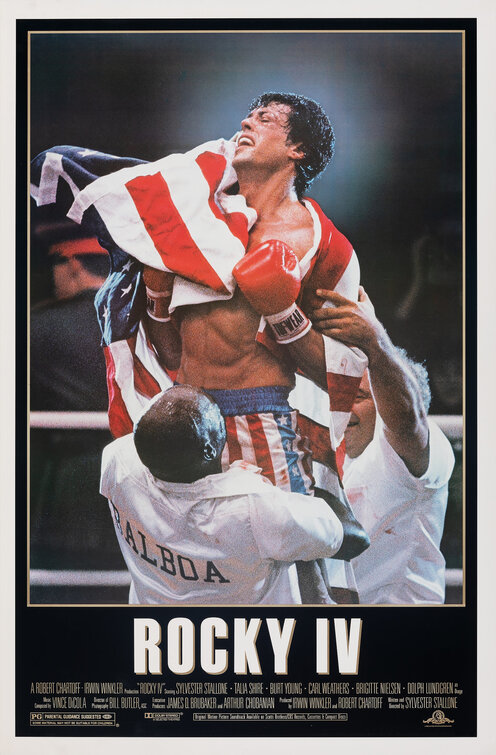
In the match’s closing minutes, Lam’s supporters pulled out a Canadian flag and waved it patriotically, a la those annoying backpackers who sew flag-patches to their bags to distinguish themselves from Americans. In a Rocky IV moment, Americans in the crowd chanted “USA, USA” for Yang, the Laotian refugee turned Californian.

The second thing that occurred to me during the WSOP was how much I hate the invoking of Jesus (or any other God) at sporting events. I wanted to cheer for Yang – he donated 10 percent of his winnings to Make-A-Wish and other charities, making him a stalwart unofficial ambassador – but he kept calling upon Jesus for help throughout the match.

In tight situations, he’d kiss a picture of his family, and then say things like, “Lord, have a purpose for me to today,” or “Jesus, make us a believer.” After winning the showdown, Yang would thank Jesus, and his family in the stands would call out “Hallelujah!” At one point, Yang went head to head with Lee Watkinson, a 40-year-old from Washington. As the two faced off, the camera flashed between Watkinson’s wife who had her hands clasped together and was vocally asking for Jesus’ intervention and Yang’s family doing almost the exact same thing.

It was an internecine poker Crusade. Unlike when Yang eliminated Alex Kravchenko and his boisterous Russian cheering section, this was a showdown between fellow congregants believing that Jesus had a direct stake in their win.

Even here in the Holy Land, I find it both divisive and pretty self-involved to believe that God is taking an interest in poker flops and game-winning touchdown drives. Nothing makes me reach for the remote faster then a post-game interview that starts with a star or a coach thanking God or Jesus. It is hard to believe that God cares so much about converting a 3rd and 16 but not about stopping genocide in Sudan.

Last year, after the Colts won the Super Bowl, I was feeling happy for Tony Dungy, the first black coach to win the big game and someone who comes across as a very decent man. When asked how it felt to be the first black coach to win the Super Bowl, Dungy responded, "I'm proud to be the first African-American coach to win this. But again, more than anything, Lovie Smith [the Bears Coach] and I are not only African-American but also Christian coaches, showing you can do it the Lord's way. We're more proud of that."

Click.

Did all the Colts players do it the “Christian way?”
Were the teams the Colts beat comprised of infidels and polytheists?
And, how did the Colts non-Christian fans feel about Tony Dungy’s post-game speech? If I was a Colts fan, I’d feel left out for no reason.

Think I’m making a big deal over nothing?

How about if your boss ended each meeting at work by thanking God for enabling him or her to be your supervisor? Or how about if Tony Dungy were a Muslim and looked into the camera and stated the Islamic equivalent, “Allahu Akbar!” I wonder if that would have gone over with football America in the same accepting way.

Religion and belief are wonderful, but bringing them into the public space and forcing them on to others – whether that is the intent or not – is more often divisive than uniting. In America, religion is a personal and private thing, something that I realize from living in the Middle East, that we sometimes take for granted. So, if you win the Super Bowl, the WSOP, or anything else, I’m not against you thanking God for giving you the strength to win. I’d just like to ask that you save the thanks for your place of worship, a private moment with like-minded individuals, or your own self-reflection.

Saturday, October 20, 2007

So Smart or So Ridiculous?

Jerusalem – My bonus time in the Rhodes airport gave me a chance to do some thinking. In between writing my blog and text messaging my (coincidentally Greek) friend Chronis who I was supposed to play poker with that evening, I had the chance to ponder some of life’s bigger questions. Here are four of them:

• What is the attraction of duty-free shops at the airport?

The Johnny Walker, Marlboro, and Cadbury are still marked up, even if you aren’t paying taxes. So, where does duty free euphoria come from? Nine Russian-speaking men and women polished off a bottle of Absolute Vodka and Bacardi Rum in 45 minutes at Gate 11 while I waited for my flight. As they did shots, snapped pictures, and hurled bawdy encouragement at each other, it occurred to me that perhaps some alcohols aren’t available for them back home. Maybe random gates at the airport are the equivalent of a hometown bar that they remember with nostalgia.

In my little world:

Boris, stretching out on a set of attached red airport chairs: “Ahh, Gate 11, they only serve the good stuff, not that awful rail vodka we drink at home, in the cold.”

Natasha, lounging on a set of chairs across the aisle: “Oh, yes. The times we had at Gate 11! I wish it could last forever!”

(In the background, an intercom voice whines, “Last call for flight 732 departing for Kiev. All passengers please board at Gate 12.”

Boris: “Last call! Last call for alcohol!”

On the other hand, if it were a question of denial at home, wouldn’t there be some cartoon-like character smoking five Marlboro reds at once, or eating bricks of Cadbury chocolate?

• Where does belly button lint come from?

My theory: undershirt lint intermingles with chest hair and then seeks out a nice warm spot to call home. But does that mean that people who don’t have chest hair don’t have belly button lint build up (BBLBU)? And what about people with outies? Are they immune to BBLBU? What if you have an outie, but chest hair too -- what’s the belly button occupancy situation? Of no surprise, Wikipedia has an explanation.

• Do foreigners come to the United States, get terrible haircuts, and bemoan their follicle miseries to their friends back home?

“I can’t believe he evened out my mullet!”
“Where is my line? This gradual fade is wimpy!”
“She straightened my home perm!”

If yes, then it means that if there was a fashion police, there couldn’t be a fashion Interpol. We have no common standards. There could be no agreement on who deserves a ticket, and in more severe cases, who needs to be extradited and incarcerated.

• What would it take for the smart car to succeed in the United States?

All over Rhodes, there were little fuel-efficient cars with names I’d never heard of before. I felt like Gulliver, surrounded by a fleet of Lilliputian bumper cars. Of course the headliner of them all is the Smart Car.

One day in Germany, a couple getting divorced couldn’t decide on who would get possession of their prized, new-aged, lime VW Bug. The couple, Helga and Bob Lingen, went to arbitration and the judge told them to cut the Bug in half; they each would get a slice. Unlike the Solomon story, they agreed. Helga got the back seat and trunk – she turned it into a hand-puppet theater. She is now performing Hamlet with a couple of argyle socks in a Stuttgart park. Bob Lingen got the front half of the Bug. A few little red wagon parts later, the Smart Car was born.

Honestly, the Smart Car just looks silly. It counterbalances its ridiculous appearance with practicality and fuel efficiency, though. It gets 60 miles per gallon (5mpg better than the Toyota Prius), costs $12,000 ($10,000 less than the Civic Hybrid), and it is 2.5 yards long – meaning that if it was an NFL running back, it would get cut during the preseason.

I pay 250 NIS ($62.50) to fill up my Subaru Forester here in Israel, and that is after a 50 percent discount on gasoline because I don’t pay the national tax! With such a financial gasoline burden, would I ever consider driving a Smart Car? Good thing for me, my cheapness will never be put to the test – I’m too big for the Smart Car.

Other, smaller, Americans will soon face this very question. The Smart Car will be available in the U.S. in a matter of months. Will gas guzzling SUV driving Americans, whose cars are a part of their patriotism, ever buy the Smart Car? Or will we just pick those Smart Cars up and throw them at each other like crumpled cans? I guess it depends on how desperate the gasoline situation becomes back home. I just don’t know.

If you have answers to any of these questions, and you don't work for Wikipedia, speak up!

Wednesday, June 20, 2007

Hillary Blew It

Washington D.C. - Hillary chose Celine Dion’s You and I as her theme music over Journey’s Don’t Stop Believen’. A few thoughts on why this choice was a disaster:

Origin of the Artist. Celine Dion is from Canada! Her website has options for English and French. Worse, when you click buttons on the website, Celine Dion’s music starts playing. Do you know how embarrassing that is when you’re at work? I had to get up and close the door to my office.
It is not that I’m anti-Canada. Anyone who has read my book knows that I like Canada and even posed as a Canuck under different periods of duress. Despite my distaste for those Canada patches that our northern neighbors sew to their backpacks (to make sure they aren’t mistaken for Americans), I think Canada is a nice, clean place and I wish we had their health care system. Even better, every twenty years, Canada sends Pittsburgh the greatest hockey player to walk the planet. I like that.
Journey, on the other hand, is from San Francisco. They are a quintessential American rock band – hits in the 70s and 80s, long hair, and mullets! That’s an image Hillary should want to identify with. The more pictures she rolls out, like the one of her in that paisley shirt (which may be velour), the better. The Midwest wants to see a human Hilary, not someone in glitter.

Sound and Lyrics. I can’t listen to You and I without worrying that someone is going to catch me and I’ll have to explain that I’m doing research for a blog post. I listened to Don’t Stop Believen' once last night and I’m humming the chorus at my desk, bobbing my head, and dreaming about big hair coming back.
As for the lyrics, Don’t Stop Believen’ blows You and I out of the water. It is about tough times, people on the margins, and hope for the future. You and I is about flying, together. As far as love songs go, that could be nice. This is theme music, though, and I don’t like the image of America and Hillary engaged in a love affair, flying together above the clouds.
Let’s go to the telestrator and examine the lyrics up close.

Don’t Stop Believen’ opens with:

Just a small town girl, livin in a lonely world
She took the midnight train goin anywhere


Who can’t identify with this? We’re all chasing dreams here. The song’s chorus is great:

Dont stop believen'
Hold on to the feelin . .
.”

Bill had “Don’t Stop” (thinking about tomorrow),” and Hillary could have had “Don’t Stop Believin.” Part of Hillary’s appeal is the return of Bill and the optimism of the 90s. The Hilary people missed.

Let’s take a closer look at the lyrics of “You and I.” The song opens with:

High above the mountains, far across the sea
I can hear your voice calling out to me
Brighter than the sun and darker than the night
I can see your love shining like a light


Huh? We’re talking about our next choice for President, not the love of my life. The chorus:

You and I
Were meant to fly
Higher than the clouds
We'll sail across the sky


I don’t get it. The flying thing seems overly ambitious. If we were meant to fly, can someone please make our airlines start serving food on the plane again? It isn’t so much that I mind eating at Potbelly’s before take off. Rather, I can’t stand the assorted smells of a mall food court emanating from the row behind me. McDonald’s and Kung Pow mixed at 30,000 feet is a recipe for nausea. Someone should do a study of the increase in the number of incidents of vomiting since airlines dropped food service. And another thing, don’t bring that big cookie around and try to sell it to me for $4. That’s just insulting.

The Titanic Factor. You say Celine Dion, I think Titanic. Maybe that’s because I lived in the Middle East for a year and had an ungodly number of conversations about Celine Dion, Canada, and Titanic, but I can’t be alone in this. I have to ask the question, “What campaign wants to be associated with the Titanic?”

So, Hillary made a mistake. She used a democratic process on her website to determine her theme music. I’m sure more people out there like Celine Dion than Journey these days, but democracy isn’t good for all situations. Democracy is good for decisions that impact the common good or the majority of the people. Choosing theme music is something entirely personal, like the clothes you wear. Is Hillary going to post potential outfits for the convention on her website and let her voters choose her wardrobe too? I hope they don’t choose an oversized Clyde Frazier throwback jersey or a Zoot suit.

It is going to be disappointing to have to hear Celine Dion over and over again for the next year and a half. The only thing that will make it tolerable is if Hillary’s team can rig it so that she swoops in from the rafters, on Batman-like wires, at future campaign appearances as they play the music. If they can do that, then I take it all back and You and I was the right choice.